Bike Travel Insurance and Damage Claims: What to Do When Your Bike Arrives Broken
20+ years testing gear in Colorado backcountry
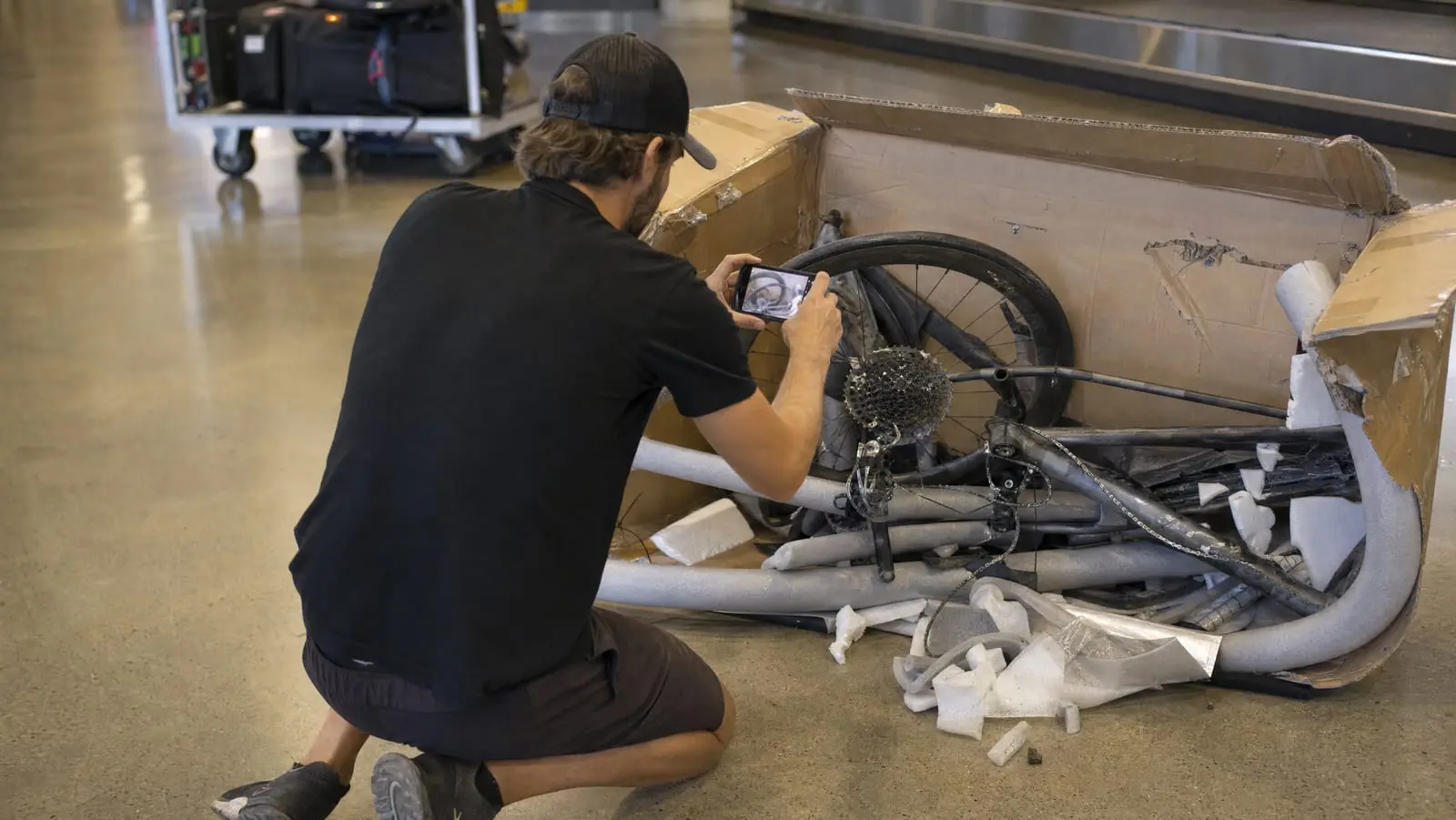
Bike Travel Insurance Starts With a Camera, Not a Policy
The most useful bike travel insurance you will ever own costs nothing: five minutes with your phone before the bike goes in the case. Photograph the bike assembled, photograph it packed, photograph the closed case, write down the serial number, and put the purchase receipts somewhere you can open from a foreign airport. Then, on arrival, report any damage before you leave the baggage area.
That is the whole protocol, and it is free. The paid products come second, because a policy without evidence is a slow way to be told no.
Everything below assumes you are already handling the rest of traveling with your bike competently — the case, the packing, the fees. This piece is only about what happens when the case comes off the belt with a corner stoved in.
The Documentation Protocol: What to Photograph and When
Claims adjusters are not judging your bike. They are judging whether you can prove three things: that the bike was intact when you handed it over, that it was packed competently, and that it is worth what you say it is worth.
Before the bike goes in the case
Shoot the bike assembled and rideable, from both sides, in decent light. Then shoot the details that a repair estimate will hinge on: the serial number, usually stamped under the bottom bracket, the rear derailleur and hanger, both wheels from the side, the bars and levers, the fork legs and the top tube.
Include the scuffs you already have. That sounds counterproductive; it is the opposite. A photo set that shows a chainstay scratch on 14 August makes the cracked chainstay on 16 August much harder to argue away as pre-existing.
While you pack
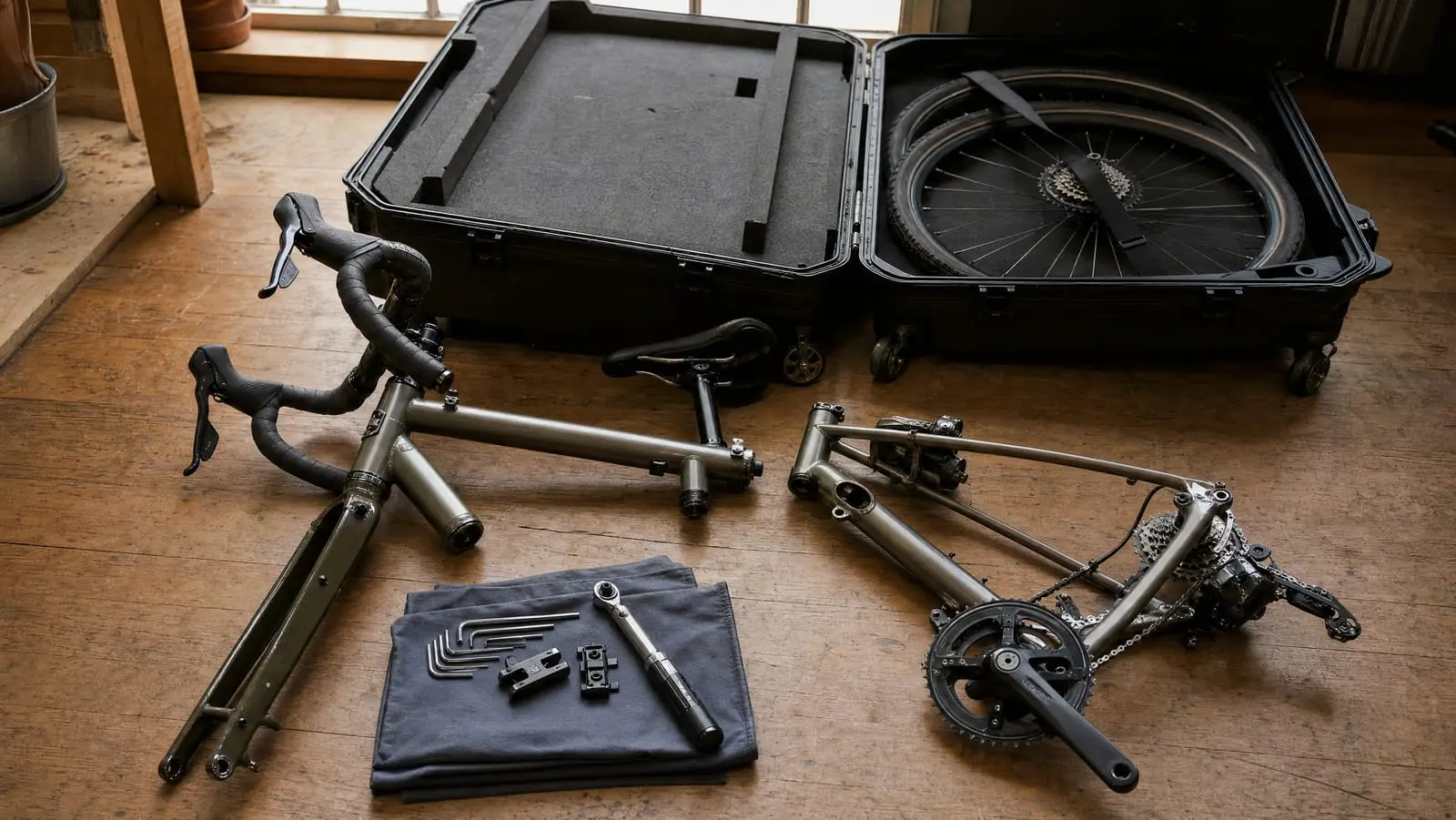
Photograph each stage — fork or wheels out, derailleur removed and bagged, foam and padding in place, everything strapped down. Then photograph the closed case with the airline tag on it.
This is the part almost nobody does, and it is the part that matters most. "Inadequately packed" is the denial reason you can most easily pre-empt, and a nine-photo sequence of a careful pack job pre-empts it. Our guide to how to pack a bike for flying covers what that pack job should look like; the photographs are what make it count later.
Where to keep it
An album in your phone is not a filing system. Put the photos, the serial number, the original purchase receipt and any receipts for wheels, drivetrain or dropper in one cloud folder, and check you can reach it without wifi. Timestamps come free with the files — do not strip metadata, and do not screenshot the photos, which usually does.
What Airlines Actually Owe You for a Damaged Bike
Two ceilings apply, and both are ceilings on liability rather than promises to pay.
Domestic US flights. The Department of Transportation sets a minimum baggage liability limit that carriers may impose. The rule raising it "from the current amount of $3,800 to $4,700" took effect on 22 January 2025, according to the Federal Register notice published on govinfo. DOT's consumer page confirms the working figure, stating that on domestic trips "the airline can invoke a liability ceiling that is regulated by DOT and that is adjusted for inflation every two years" and that the limit is currently $4,700 per passenger. Because it is indexed and reviewed on a two-year cycle, check the source page rather than trusting a number you read in a forum thread.
International itineraries. The Montreal Convention governs. ICAO announced that the limit for destruction, loss, damage or delay of baggage rose from 1,288 SDR to 1,519 SDR — roughly US$2,000 — effective 28 December 2024, under the treaty's built-in five-year inflation review (ICAO). SDR is an IMF unit, so the dollar equivalent drifts: DOT currently puts 1,519 SDR at approximately $2,175 per passenger.
Note the gap. A ceiling around $2,175 does not cover a $5,000 bikepacking rig, and even the domestic $4,700 is a maximum, not a default payout. DOT notes that airlines, like insurance companies, consider the depreciated value of your possessions rather than the original price or replacement cost. Carriers also deny for exclusions and settle for repair cost when repair is possible.
A liability limit is the most the airline can be made to pay, not the least it will offer.
The Limited-Liability Release Nobody Reads
At check-in, many carriers will hand you a release for sporting or fragile equipment. Signing it is a decision, not a formality.
Delta's sporting equipment policy requires bicycles to be "packed in a durable protective container designed specifically for bicycles," and states plainly that "Delta is not responsible for damage noted at the time of check in or damage due to over packing the bag." A hard shell case designed for bikes needs no release; a soft-sided travel bag or anything else means a limited liability release form gets signed. Avelo takes the same line, accepting bicycles in cardboard or soft-sided cases subject to a limited release of liability.
Policies differ by carrier and by route, so read your own. But the pattern is consistent enough to change a purchase decision: the case you choose has an insurance dimension, not just a protection one. That is worth weighing against price and weight in our best bike travel cases and bags roundup, and against the fee structure in airline bike fees and policies, where the counter conversation usually happens.
We would not tell you a hard case is always right — they are heavy, expensive, and awkward to store at the far end. We would tell you that if you fly a $4,000 bike more than twice a year, the release form is a real cost of the soft bag.
Airline Damaged My Bike: Filing the Claim Step by Step
- Open the case in the baggage hall. Not at the hotel. DOT's guidance is to check for damage and report problems to the airline before leaving the airport, and to insist on having a report created (transportation.gov).
- Get a written reference number. American Airlines, as one published example, asks passengers to file a damaged-bag report before leaving the airport or within a few hours of receiving the bag on domestic flights, and within seven days on international ones, then issues an incident number (aa.com). For international travel the treaty backstop is Article 31 of the Montreal Convention, which requires a written complaint at the latest within seven days of receiving checked baggage (summary of Article 31).
- Photograph the damage before you touch anything. Case exterior, case interior, bike still strapped in, then the broken part.
- Keep the case and the packing materials. Adjusters ask for them, and throwing them away reads as destroying evidence.
- Get a written estimate from a bike shop. Itemised, on letterhead, with part numbers. This is the single document that moves a claim.
- File inside the deadline, and follow the paperwork chain. American, for instance, asks for a property questionnaire within 30 days of the first report. Miss a stated window and the merits stop mattering.
- Escalate in writing if denied. Ask for the specific contract-of-carriage clause relied on. Vague denials often soften when you make them cite something.
The Four Places Bike Coverage Can Come From
Terms vary enormously by insurer, product and country. Treat what follows as a map of the categories, then read your own documents.
1. The carrier's own liability. Free, capped at the limits above, and narrowed by the release you signed. Best for obvious in-transit damage to a properly cased bike.
2. A homeowners or renters policy. Many policies cover a bicycle as personal property, on and off the premises. Two catches: the deductible often exceeds a modest repair, and limits can be low — Policygenius notes off-premises coverage is typically capped around $500 without a scheduled endorsement, and that a scheduled endorsement runs roughly $100 per $10,000 of coverage. Some policies also exclude property in transit. Ask your agent that question specifically.
3. Travel insurance with a sports-equipment benefit. Useful, and frequently smaller than riders expect. Squaremouth describes sports equipment loss limits as typically $500 to $3,000 per person, with per-item limits between $50 and $500. A $300 per-item cap does very little for a loaded gravel bike. Read the per-item number before the headline number.
4. A specialist bicycle policy. The only category built for this. Velosurance, underwritten by Markel, states its policy covers the bike while in transit by airline and other shipping companies, with an optional worldwide extension for international riding. We are not naming a best insurer — the point is that the category exists and reads the way cyclists actually travel.
A weaker fifth: credit-card protections. Some cards include baggage benefits, but sporting equipment is frequently sublimited or excluded outright. AwardWallet's summary lists Visa Infinite and select Signature cards at up to $3,000 per person per trip, including up to $500 for high-risk items — but Visa's own Lost Luggage Reimbursement terms exclude "sporting equipment", cover bicycles only "when checked with the Common Carrier", and pay for loss "due to theft or misdirection" rather than damage. Treat it as a backstop, not a plan, and pull your own guide to benefits.
Bike Shipping Insurance Claims Are a Different Animal
Ship the bike and you are not a passenger any more — you are a shipper, and the protection on offer is usually declared value, which is not insurance.
BikeFlights is explicit about this: "Bikeflights.com is not an insurer. Our Premium Protection Plan is not insurance." Every order includes $100 of Premium Protection, with additional cover purchasable in amounts up to $20,000 at booking. The default $100 is close to meaningless against a bike, so the declared value is the line to look at.
The upside is that it is cheap relative to the bike, and the claim runs against a shipper with a defined process rather than an airline counter at 11pm. The downside is that "properly packed contents" is a condition, which puts you right back at the packing photographs. If you are still deciding, our comparison of shipping your bike vs flying with it covers the cost and hassle side.
Is It Worth Insuring at All?
Run the arithmetic instead of the anxiety.
A $900 touring bike, flown once a year, against a homeowners policy with a $500 deductible: usually no. Most realistic damage — a bent hanger, a taco'd wheel, a snapped lever — lands under or barely over the deductible, and a claim on your home policy has its own downstream cost.
A $5,000 bikepacking rig flown four times a year: usually yes, and specifically a specialist policy rather than a rider, because the per-item caps on generic travel cover do not reach. Somewhere in the middle, the honest answer is that the free protocol at the top of this article does more for you than any premium you could pay.
One more variable: how repairable the bike is where you are going. Carbon frames, proprietary dropouts and 12-speed electronic drivetrains raise both the cost of a claim and the odds your trip ends when the case is opened.
What to Do Before Your Next Flight
Tonight, before you think about premiums: photograph the bike, photograph the serial number, find the receipt, and put all three in one folder you can open on hotel wifi. That is the highest-return fifteen minutes in this whole article.
Then read one document — your carrier's contract of carriage, or your own policy schedule. Not a summary of it, the actual document. Every real answer about what you are owed is in there, and the binding version is never the blog post.
This closes our series on bike travel logistics; if you are planning the whole trip rather than just the insurance question, start from our guide to how to travel with a bike and work forward from the case you choose.