Airline Bike Fees and Policies: What It Really Costs to Fly With a Bike
20+ years testing gear in Colorado backcountry
What Airline Bike Fees Cost in 2026
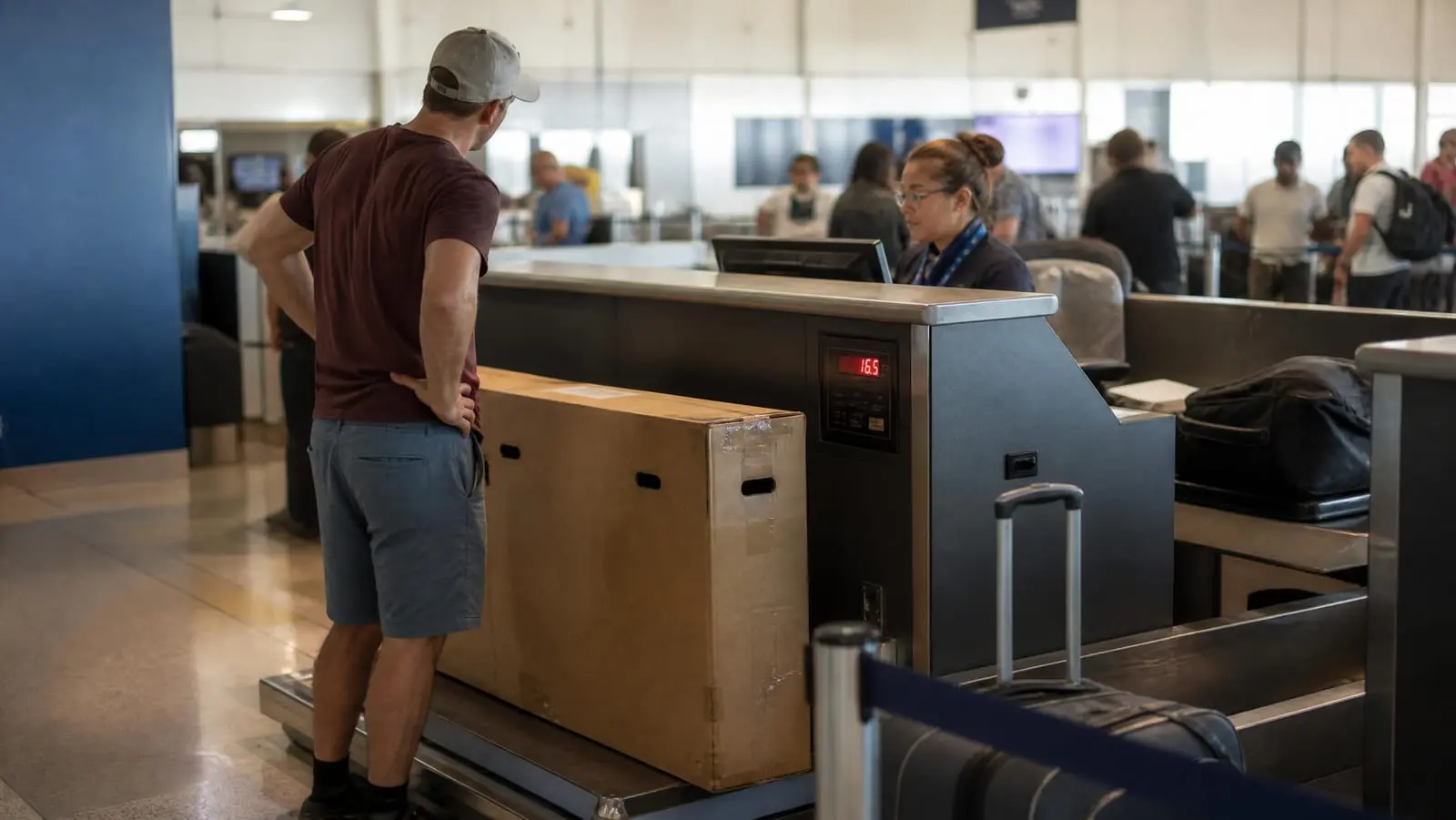
Budget $45 to $60 each way to fly a bike inside the United States as of August 2026. That is the price of one ordinary checked bag, not a bike surcharge — most major US carriers folded bicycles into standard checked baggage years ago. Blow past the size or weight cap and you add $100 to $200 per bag, per direction.
This article contains affiliate links. We may earn a commission if you make a purchase through our links, at no extra cost to you.
What trips people up is not the fee. It is the threshold. Two riders on the same flight can pay $45 and $245, and the only difference is a packed case that weighs 72 pounds instead of 49. This piece covers the money and the rules; for everything else, see our complete guide to traveling with your bike.
How Bikes Became Ordinary Luggage
For most of the 2010s, checking a bike meant a flat special-handling fee of $150 to $200 on top of the bag charge. That era is over at nearly every US carrier.
United went first among the big three, dropping its bicycle surcharge and treating bikes as standard luggage — BIKEPACKING.com reported the change in October 2021, noting you would still pay for a box over 50 pounds "as with any standard luggage." Alaska had already moved sports equipment to standard checked-bag pricing, replacing what its own newsroom describes as a previous $75 oversize fee, and Hawaiian began accepting bicycles as standard checked baggage on January 8, 2025.
Then the base price of a checked bag went up. In spring 2026, four major carriers raised checked baggage fees within about two weeks of each other, a move Afar attributes to a jet fuel price spike. Bag fees are a profit center — Bureau of Transportation Statistics data put US checked-bag revenue above $7.2 billion in 2024 (bts.gov) — so expect the numbers below to keep moving.
The bike fee did not go away. It got renamed "checked baggage" and repriced twice in eighteen months.
The Two Numbers That Trigger a Fee: Linear Inches and Pounds
Every policy below is built on the same two measurements.
Linear inches = length + width + height. A case measuring 45 × 30 × 12 inches is 87 linear inches. Measure the outside, including wheels, feet and protruding hardware — that is what the agent's tape catches.
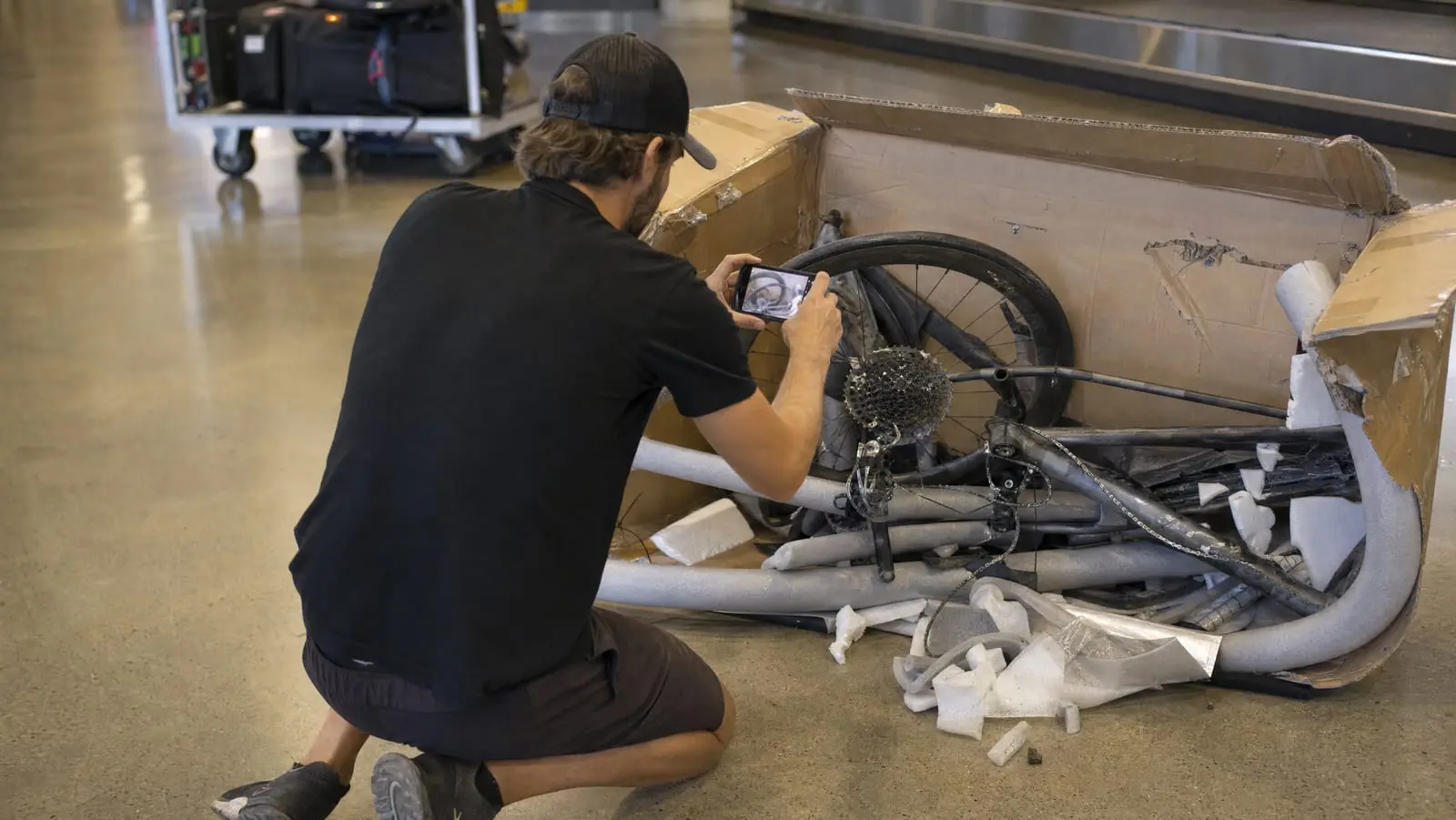
Weight = the case plus everything in it. This is where riders get burned. A hard case can weigh 25 to 33 pounds empty, leaving 17 to 25 pounds of bike before you cross the 50-pound line. A 24-pound gravel bike plus a 28-pound case is 52 pounds, and that is a $100 mistake at the scale.
The thresholds that matter, as of August 2026:
- 62 linear inches — the ordinary checked-bag limit. No bike case clears it, which is why the sports-equipment exemptions exist.
- 115 linear inches — the outer boundary most carriers set for a bicycle at the standard bag rate.
- 50 / 70 / 100 pounds — where overweight charges begin, escalate, and turn into a flat refusal.
Airline Bike Fees by Carrier: August 2026
Domestic economy, first checked bag, each way. Fees rise for a second bag and vary on long-haul international routes.
| Airline | First checked bag (domestic) | Bike-specific fee | Size cap at standard rate | Weight before surcharge |
|---|---|---|---|---|
| Delta | $45 ($55 second) | None | 115 linear in (hard refusal above) | 50 lb; refused at 100 lb |
| United | $45 prepaid / $50 at airport | None | 115 linear in | 50 lb; $100 to 70 lb, $200 to 100 lb |
| American | $45 prepaid / $50 at airport | None (oversize waived) | 115 linear in | 50 lb, then standard overweight fee |
| Southwest | $45 ($55 second) | None (oversize waived) | 115 in total dimensions | 50 lb; $100 to 70 lb, $200 to 100 lb |
| Alaska | $45 ($55 second) | None | 115 linear in | 70 lb; $100 from 71 to 100 lb |
| JetBlue | $45 off-peak / $49 peak | $100 handling fee reported | 80 linear in (refused above) | 50 lb; $150 at 51–99 lb |
Flying With a Bike on Delta
Delta's sporting equipment page requires bikes to be "packed in a durable protective container designed specifically for bicycles," charges the excess weight fee over 50 pounds, and states that if the outside linear dimensions "exceed 115 linear inches (292 cm) or weigh 100 lbs, or more the item will not be accepted" (delta.com). Standard baggage fees apply — no separate bike charge.
Delta raised domestic checked bag prices to $45 for the first bag and $55 for the second, effective April 8, 2026, per Afar's summary of the 2026 increases — a hike that applied to domestic and select short-haul international routes only, leaving long-haul pricing alone. One paperwork trap: a soft-sided bag requires a signed limited liability release, under which Delta accepts no responsibility for damage.
The United Airlines Bike Policy
United treats a bicycle as a standard checked bag when the packed case is under 115 linear inches and 50 pounds, with overweight charges of $100 from 51 to 70 pounds and $200 from 71 to 100 pounds, according to Orucase's United airline guide. United asks that the bike be padded and enclosed in a hard or soft case, with pedals removed and tires slightly deflated.
United was the second carrier to move in 2026, following JetBlue's late-March increase: $45 prepaid or $50 within 24 hours of departure for the first bag, $55 / $60 for the second, on tickets purchased on or after April 3, 2026, per Afar. Prepaying online is a real $5 saving, not a marketing line.
American Airlines
American removed oversize fees for sports equipment including bicycles, and accepts a bike case up to 115 linear inches and under 50 pounds at the standard checked-bag rate, per Orucase's American guide.
American's newsroom puts the domestic Main Cabin first bag at $45 prepaid or $50 at the airport and the second at $55 / $60 for tickets booked April 9, 2026 and beyond (news.aa.com). The same release adds a Basic Economy penalty: from May 18, 2026, domestic Basic Economy passengers pay $50 prepaid or $55 at the airport for the first bag, and $60 / $65 for the second. On American, the cheap fare costs your bike an extra $5 each way.
Flying With a Bike on Southwest
Southwest's bicycle policy page is unusually blunt: non-motorized single-seat bicycles are accepted as checked baggage, "pedals and handlebars must be removed and packaged in protective materials," oversize fees are waived, and "bicycles over 100 pounds in weight and/or 115 inches in total dimensions cannot be checked as baggage" (support.southwest.com). Cardboard and soft cases travel only under a limited release of liability.
The bigger change is upstream: Southwest ended its long-running free-checked-bag policy in 2025. Its Optional Travel Charges page now lists a first bag at $45 and second at $55 for travel booked on or after April 9, 2026, with overweight surcharges of $100 (51–70 lb) and $200 (71–100 lb) on top (southwest.com). A-List Preferred and Business Select still get two free bags, which makes Southwest the cheapest bike carrier going if you hold status.
Alaska Airlines
Alaska has been the bike-friendliest major for years and structurally still is: bicycles ride as standard checked baggage up to 115 linear inches and 70 pounds, with charges starting at $100 beyond that, per Orucase's Alaska guide. That 70-pound allowance is the most generous number in the table. Alaska raised its own fees on April 10, 2026, to $45 first bag and $55 second, with overweight tiers of $100 (51–70 lb) and $200 (71–100 lb), per Upgraded Points' Alaska baggage breakdown updated June 10, 2026.
JetBlue: The Expensive Outlier
JetBlue is the one carrier where a normal bike case can be refused outright. JetBlue's own optional-fees schedule lists oversize bags of 63–80 inches at $150, overweight bags of 51–99 pounds at $150, and states plainly that bags over 80 inches "will not be accepted" (jetblue.com/legal/fees). First checked bag runs $45 off-peak or $49 peak.
Eighty linear inches is small — plenty of cardboard bike boxes and full-size hard cases measure 100 to 115. Orucase's JetBlue guide also reports a $100 bicycle handling fee on top of the bag charge, plus a pre-registration requirement. If JetBlue is your only option, you need a genuinely compact case — the sub-80-inch designs we cover in the best bike travel cases for bikepacking — or a different plan.
Five Ways the Cost to Fly With a Bike Goes Sideways
1. Basic economy. American's Basic Economy bag surcharge is explicit and published. Elsewhere the risk is subtler: the waivers tied to co-branded cards and elite status are what keep your bike cheap, and the cheapest fare bucket is where they get clipped. Price the fare with the bag.
2. International versus domestic. On long-haul international itineraries the first checked bag is often included in the fare, so your bike can fly free inside the allowance. On short-haul routes to Canada, Mexico and the Caribbean, the 2026 domestic increases generally do apply.
3. The connecting-carrier trap. Under 14 CFR 399.87, on itineraries with a US origin or destination, carriers must apply the baggage allowances and fees in effect at the start of the itinerary across the whole trip — and on codeshares, the marketing carrier's rules govern, not the operating carrier's. So a JetBlue-marketed segment does not get Alaska's rules just because Alaska flies the plane.
4. The overweight cliff. Surcharges are not prorated. At 51 pounds you pay the full $100, same as at 69. One pound of packing foam can cost more than the bag itself.
5. Compressed gas. TSA lists CO2 cartridges as prohibited in both carry-on and checked bags, with narrow exceptions for empty cylinders and life-vest cartridges (tsa.gov). Pack a mini pump and buy cartridges at your destination — worth cross-checking against your bikepacking packing list before every flight.
E-Bikes and Lithium Batteries Are a Separate Rulebook
Your realistic options are shipping the battery by approved ground freight, renting a battery at the destination, or renting the whole bike. We go deeper on batteries, tools and stove fuel in a forthcoming piece on flying with bikepacking gear. If you fly often, that constraint belongs in the buying decision — see our roundup of bikepacking bikes at every budget.
How to Actually Pay Less
- Prepay online. United and American both discount the first bag by $5 when you pay in advance rather than at the counter.
- Get under 50 pounds, always. The highest-leverage move there is. Riding kit, tools and shoes go in your carry-on; the case carries the bike.
- Choose the case by linear inches, not by looks. A sub-80-inch case clears every carrier in the table, JetBlue included. A 110-inch case is fine on five of six and refused on the sixth.
- Use the status you already have. A co-branded airline card with a free first checked bag pays for itself in roughly two bike flights a year.
- Consider not flying it. A case plus two bag fees plus reassembly time can exceed a good rental. Run the numbers on shipping your bike vs flying with it before you commit.
- Do a dry run. Packing at home tells you what fits and what the case weighs. Our bikepacking bag and storage guide covers what goes where; a dedicated piece on how to pack a bike for flying is coming next.
When the Gate Agent Quotes the Wrong Policy
It happens often, because bike rules changed recently and counter staff do not check bikes every day. The fix is procedural, not confrontational.
Bring the policy with you. Screenshot the carrier's own bicycle or sports-equipment page, URL visible in the shot, and save it offline. A screenshot beats a memory every time.
Ask for a supervisor before you raise your voice. Bike-fee disputes are almost always a training gap, not a decision. A supervisor can override in seconds.
Pay under protest, then file. If you have a flight to catch, pay, keep the receipt, and submit a refund request through customer relations with the screenshot attached.
Arrive early. Oversize baggage drop is a separate counter with its own queue. Add 30 minutes to whatever you would normally allow — the same buffer logic we use in planning your first bikepacking trip.
The Bottom Line
As of August 2026, flying with a bike inside the US is a $45 to $60 each-way proposition on Delta, United, American, Southwest and Alaska, provided your packed case stays under 115 linear inches and 50 pounds. JetBlue's 80-inch ceiling and reported bike handling fee make it the one carrier to plan around. E-bike batteries above 160 Wh cannot fly at all.
Do three things before you book: measure and weigh your packed case, screenshot the airline's current bike policy, and confirm the marketing carrier on every segment. Everything downstream — cases, packing, insurance, ground transport at the far end — is covered in our guide to how to travel with a bike.
Fees will change again. The thresholds rarely do. Build your setup around 115 inches and 50 pounds and you stay on the cheap side of the counter no matter what the price sheet says next spring.