Shipping Your Bike vs Flying With It: Cost, Risk, and When Each Wins
20+ years testing gear in Colorado backcountry
Shipping a Bike vs Flying With It: The Two-Line Verdict
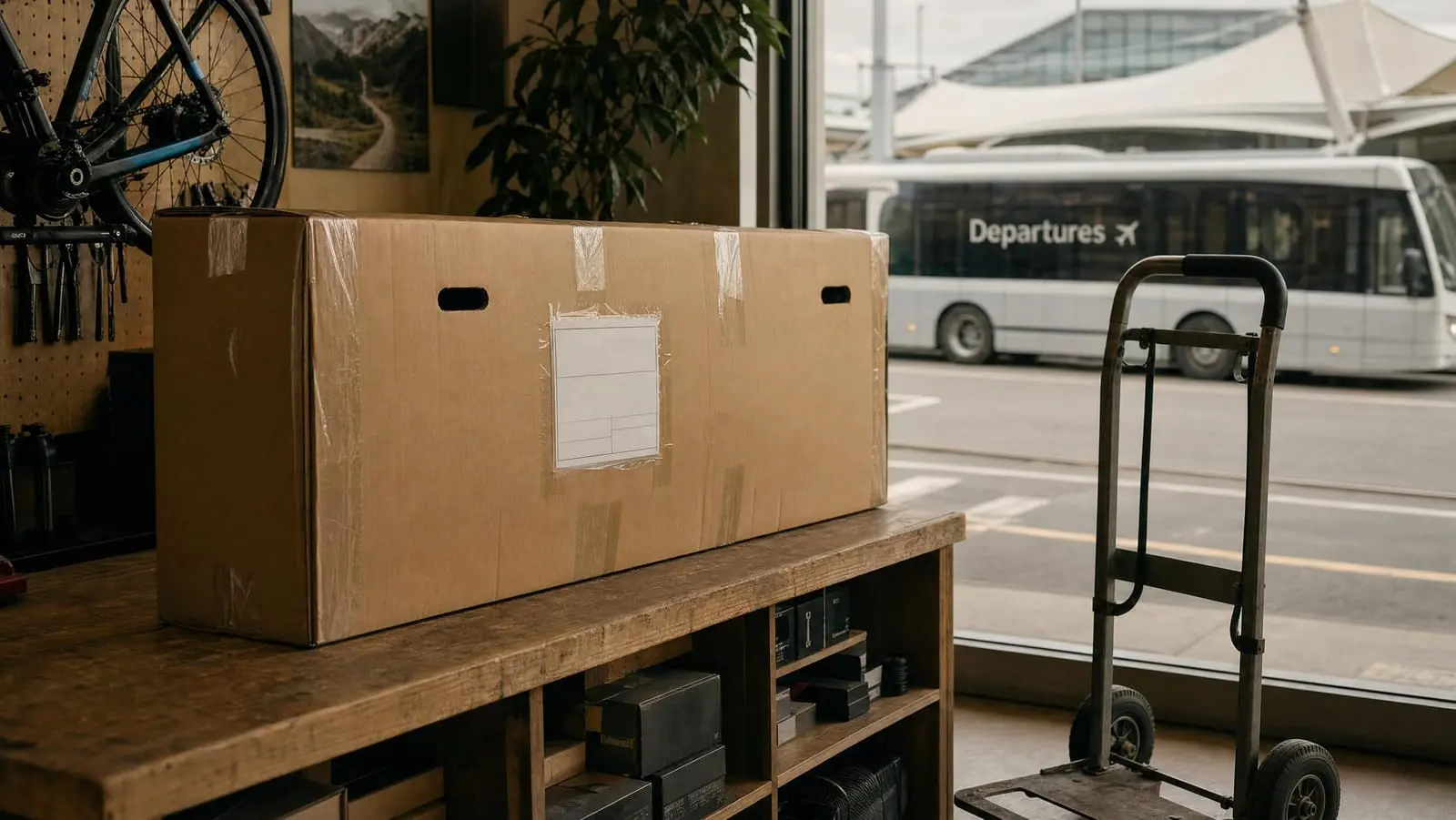
The honest answer on shipping a bike vs flying with it: ship when your trip starts and ends in different places, when the itinerary involves more than one flight, or when you are gone long enough that a case would sit in a hotel closet for two weeks. Fly with it when you are doing a short round trip out of a single airport and you will have a vehicle at the far end.
Everything after that is a cost and risk argument, and the numbers are closer than most riders expect. A specialty shipper is not always cheaper than a checked bag; it is more predictable, which is a different and usually more valuable thing. This piece is the money-and-logistics half of traveling with your bike.
What It Actually Costs to Ship a Bike
Bike shipping is a rate table, not a price — distance, box volume, weight and speed all move it, so quote your own route. But the spread between services is large and consistent. Red Stag Fulfillment's carrier comparison, last updated July 8, 2025, priced one reference bike — a 54 x 8 x 28-inch box, about 30 pounds packaged, declared at $3,000 — across routes of roughly 130 to 2,450 miles:
| Service | Ground, one way (130–2,450 mi) |
|---|---|
| BikeFlights (UPS Ground) | $56.97 – $100.89 |
| ShipBikes | $76.20 – $117.71 |
| FedEx Ground | $115.56 – $206.04 |
| UPS Ground (retail) | $131.54 – $226.65 |
| USPS Ground Advantage | $134.65 – $278.85 |
A March 2026 carrier roundup from atoship puts the whole category at "$50 to $350 depending on your method," with BikeFlights at $60 to $150 for domestic ground.
The specialty resellers are the product. BikeFlights and ShipBikes buy carrier capacity in volume and resell it with insurance and signature service attached; the identical box booked direct at retail costs roughly twice as much.
Speed is the other lever, and it is brutal. The Pro's Closet quoted BikeFlights at $75 for six-day ground from New York City to Boulder and $390 for three-day air on the same lane — 2021 figures, so read that as a ratio, not a rate. Buying three days cost about five times the shipment. Plan earlier instead, and remember every number above is one direction: budget $120 to $240 for a domestic round trip as of August 2026, before coverage and before the box.
The Airline Fee Is Not the Airline Cost
Flying looks cheaper on the booking screen because the checked-bag fee is the only number anyone shows you. Current carrier-by-carrier prices, size caps and overweight thresholds live in our airline bike fees and policies piece. The costs missing from that fee decide the comparison:
- Oversize and overweight surcharges. Step functions, not gradients. A case that weighs 52 pounds is not 4% more expensive than one that weighs 50.
- A vehicle that fits the case. A hard case does not go in a compact rental. You are booking an SUV or minivan for the airport transfer, both directions.
- Storing the case while you ride. On a point-to-point route the case has to live somewhere. Radical Storage lists US luggage-storage pricing from $4.90 per bag per day plus a service fee, and prices its New York example at $4.90 plus a $1.75 fee, or $6.65 — call it $7 a day, and confirm the location takes an item that size. Fourteen days is most of a shipping bill.
- Ground transport at the far end. A 45-inch case does not fit a sedan taxi, a rideshare hatchback, or most airport shuttles.
Shipping costs more than the checked-bag fee and less than the checked-bag trip.
None of it applies if you land at one airport, throw the case in a rental you were booking anyway, and start your loop from the parking lot. That is the trip where flying wins.
Door-to-Door Timing and the Buffer You Need
Shipping trades certainty of possession for certainty of cost: you give up the bike for several days on each end. BikeFlights says it offers service speeds between one and five business days, ground being the cheap end. Pickups are scheduled by day, not time: all are set for between 12 pm and 4 pm local time and can fall outside that window depending on the driver's volume. Delivery is the same — a day, not an hour.
The planning math is transit estimate, plus weekend days that are not business days, plus buffer. We would ship domestically seven days out, and ten for anything crossing a border or heading to a mountain town. The buffer costs nothing; missing it costs the trip. The return is the mirror problem — the bike leaves after you do and lands at home three to seven days later.
Risk and Liability: Who Actually Pays
Here the two options stop being similar, and the fine print beats the marketing.
Flying. On domestic US itineraries an airline may cap its liability for lost, delayed or damaged checked baggage at a DOT-set ceiling, which rose from $3,800 to $4,700 effective January 22, 2025 — a maximum a carrier may impose, not a payout you are promised. Packaging conditions matter too: Delta requires bikes to be packed in a durable protective container designed specifically for bicycles, and several carriers ask you to sign a limited-liability release for a bike in a soft-sided bag. Sign that and you have largely signed away the claim.
Shipping. Coverage is bought, not assumed. Every BikeFlights order comes with $100 of Premium Protection, with more available up to $20,000 at booking. Note the limits: BikeFlights states plainly that it is "not an insurer" and the plan "is not insurance," it covers the contents rather than the case, and packages valued at $500 or more require a signature on delivery. Carrier-direct is stingier — reporting on FedEx's terms describes a default liability of $100 per package and a maximum declared value of $2,000 for Ground and Home Delivery.
BikeFlights' own comparison claims loss or damage rates of 1-2% for shipping carriers against 4-6% for airlines. That is a shipping company's number about shipping — but the structure underneath is fair. A parcel network scans a package a dozen times and owns the whole chain; a bike box at an airport meets a different ground crew at every stop.
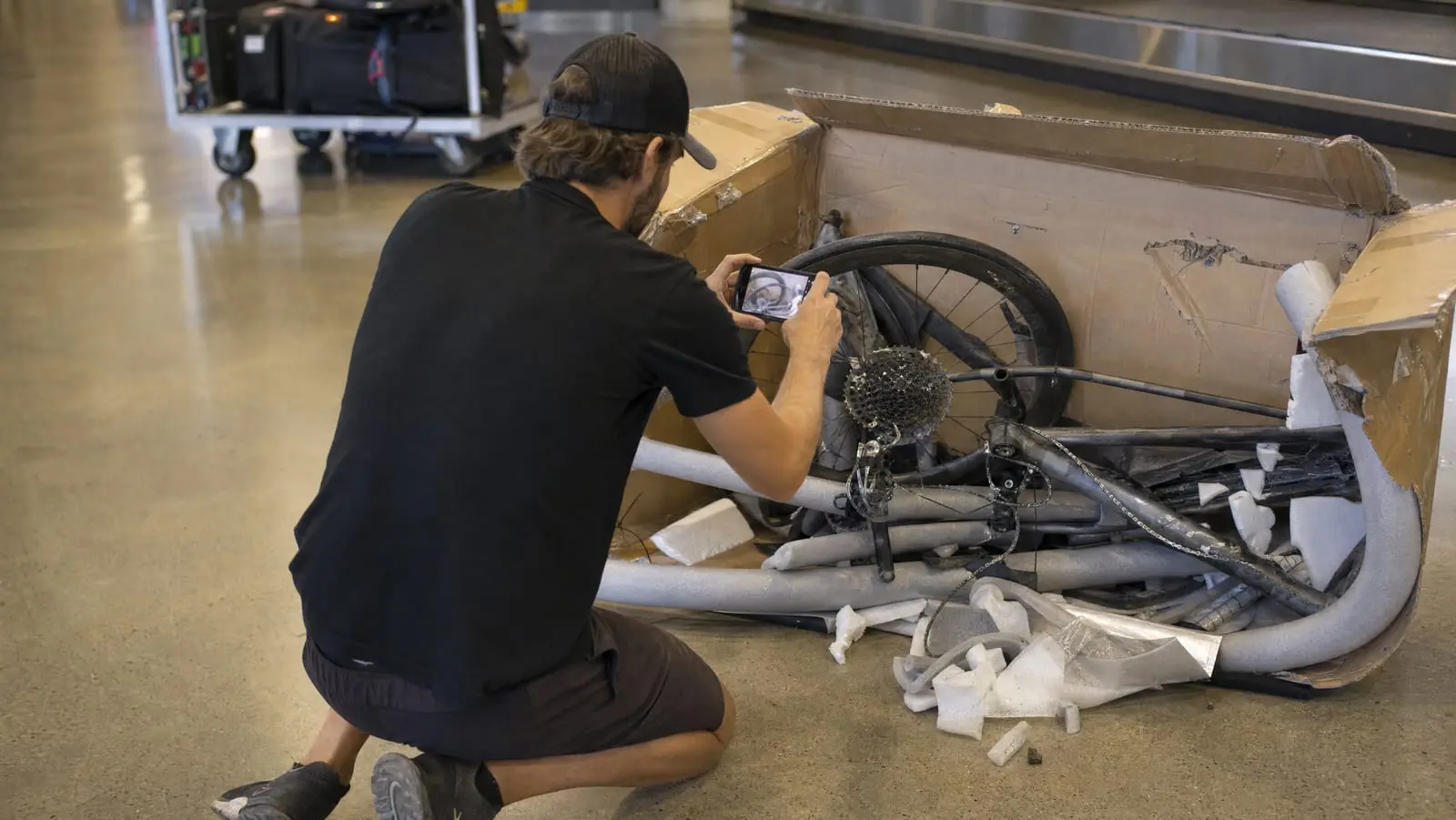
Claims differ just as much. A shipping claim is a commercial dispute with a tracking number, photographs and a value you chose. An airline damage claim starts at the baggage service office before you leave the airport — walk out without filing and you have usually lost. Riders with expensive bikes should treat bike travel insurance and damage claims as a separate question; a standalone or homeowner's rider often pays where neither carrier will.
What the Bike Travels Inside — and What Fits
The box is the same problem either way, with one difference: airlines price by linear inches and pounds, shippers by cubic volume and pounds.
BikeFlights publishes its thresholds on its dimensions and rates page. Best rates need a longest side of 48 inches or less, a second side of 30 inches or less, volume under 8,640 cubic inches and weight under 50 pounds; good rates extend to 17,280 cubic inches and 110 pounds. Hard ceilings are 165 inches total size, 108 inches of length and 150 pounds, and exceeding them triggers carrier penalties the company describes as "totaling US$2,100 (or more during heavy demand/surge periods)."
Shipping is far more forgiving about weight and far less forgiving about volume. A 70-pound box is a routine shipment and an expensive checked bag. A coffin-sized hard case clears an airline's linear-inch limit and becomes a volumetric-rate problem for a shipper.
Our guide to the best bike travel cases and bags covers hard shell versus soft bag versus plain cardboard, including the free bike-shop box you are willing to abandon. Either way the bike comes apart the same way — the how to pack a bike for flying sequence is the sequence for a shipping label too, minus the airport.
One thing neither method solves: CO2 cartridges. The FAA's PackSafe guidance on small compressed gas cylinders allows at most four non-flammable cartridges of 50 ml or less, checked baggage only and with airline approval — but TSA screening is the stricter rule you actually meet, and TSA lists CO2 cartridges as prohibited in both carry-on and checked bags unless the cylinder is visibly empty. Shipping is not the loophole either: BikeFlights says that because it cannot specify whether a shipment travels by ground or air, and cartridges are prohibited on air shipments, "you should never include CO2 cartridges in your shipment." Pack a hand pump and buy cartridges at a shop when you land.
How Shipping Actually Works, Practically
The mechanics are simple. The addressing is where people get burned.
Ship to a bike shop, not to yourself. A shop has business hours, a signature-capable human and a floor pump. Call first, confirm they take inbound customer shipments, and ask what they charge to hold and reassemble. Put the shop's name on line one and your name plus arrival date on line two, so the box does not read as inventory.
Hotels and lodges work if you get it in writing. Email the property, get a named person's reply, and put your reservation dates on the label. A box that lands before your reservation opens is a box in a stranger's storage room.
Have a fallback. If you cannot sign on the delivery day, BikeFlights says it will reroute to another pickup point such as a UPS Store or a local bike shop, for a $20 fee within the same delivery area.
Plan the return leg at home. Keep the box and the packing material, and decide now where you repack. Point-to-point riders should ship to the start and buy a fresh label at the finish, not drag a box across a state.
Which Trip Shape Wins
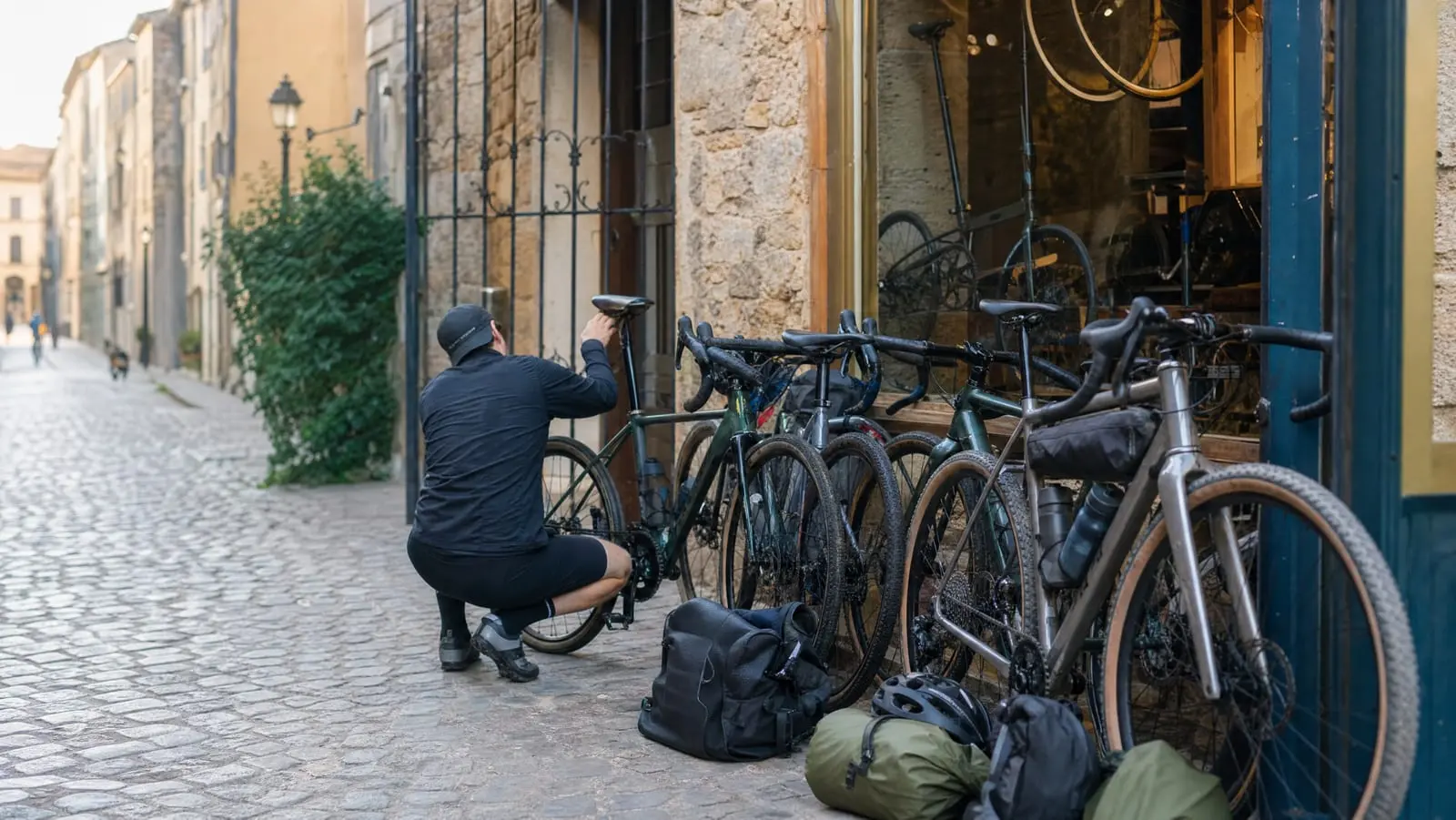
- Point-to-point route. Ship. There is no way to move a case from the start to the finish that does not involve a rental car you drive twice.
- Loop from one airport. Fly with it. Land, drive, park, ride, come back to the same case.
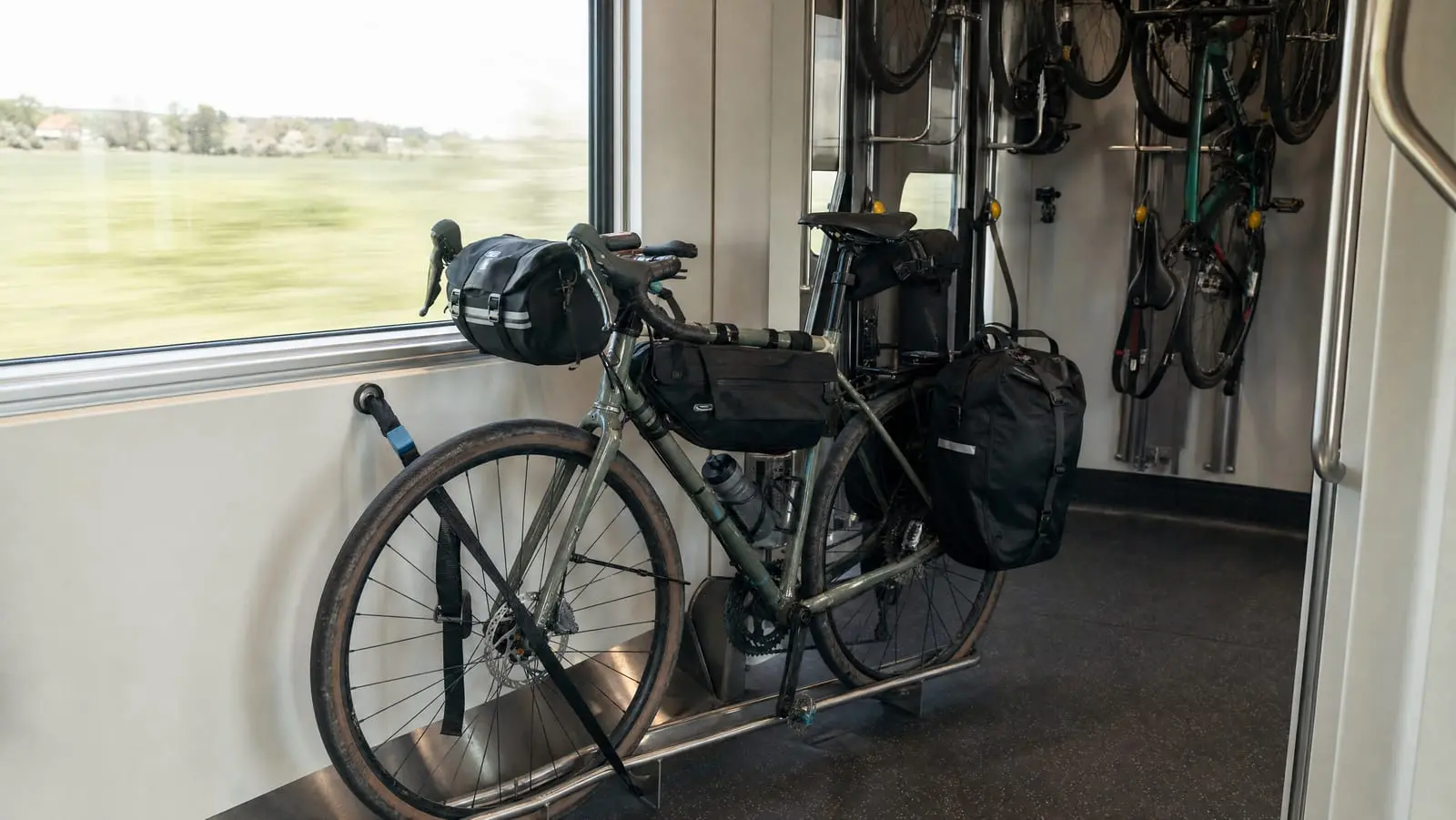
- Two or three flights to the trailhead. Ship. Every connection is another chance to miss a transfer, and regional aircraft have real limits on what they load.
- Long weekend. Fly with it. Four days of transit on each end does not fit inside a five-day trip.
- Three weeks or more. Ship. Storage and rental-vehicle costs scale with time; shipping does not.
- Expensive carbon race bike. Ship it, in a hard case, with the value declared.
- Steel tourer in a cardboard box. Fly with it. If the box dies you are out an hour at a shop, not a frame.
The Case Against Shipping
We would still fly with a bike more often than the internet suggests, and the reason is asymmetry of failure.
A delayed checked bag is an inconvenience: your bike is at the airport, you are at the airport, and the airline is on the hook to deliver it. A box that has not arrived when you land is a different animal — somewhere in a network you cannot see, on a schedule you cannot escalate, with waiting or renting as the only remedies.
Shipping also asks you to commit early: a box, a packed bike and a confirmed address a week out. Fine for a planned tour, hopeless for a trip booked on a Tuesday. And it is worse for rural destinations, where ground networks thin out. If your start is a forest service road in Idaho, the flight is the more controllable option even though it looks harder.
Run the pre-trip bike inspection checklist before the bike goes in the box either way. Whatever is wrong now will be worse after a rebuild in a hotel car park.
What We Would Do
If we were flying to a loop we could start from the airport, we would pack the bike and check it. If the route ends somewhere other than where it starts, or there are three boarding passes between home and the trailhead, we would ship — $120 to $240 round trip, sent a week early to a bike shop, landing with nothing but bags.
The version that goes wrong most often is neither. It is deciding late, packing in a hurry, and finding out at the counter that the case weighs 58 pounds. Pick the method a fortnight out, weigh the packed box at home, and either works.
For the rest of the sequence — cases, packing, security, the rebuild at the far end, and what to do when the bike arrives damaged — start with our guide to how to travel with a bike.